516-681-5330Request a visit

Procedures

Wisdom Teeth Removal

Evaluation and surgical removal of erupted and impacted third molars, with sedation and general anesthesia in the office.

Anesthesia
IV sedation or general, most often
Surgery
Usually under an hour
Downtime
Typically 3 to 5 days
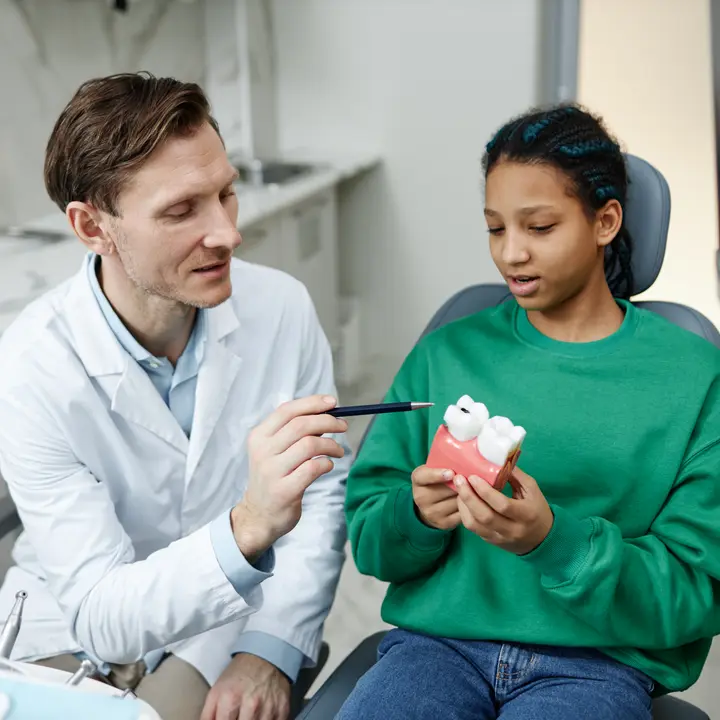
A clinician explaining a tooth model to a teenage patient

Overview

What the procedure involves.

The third molars are the last teeth to develop, usually forming in the mid-teens and attempting to erupt between seventeen and twenty-five. When the jaw lacks room they become impacted: trapped beneath the gum or bone, or erupting at an angle against the second molar.

Impacted third molars are a common source of infection, damage to neighboring teeth and, less often, cysts within the jaw. Evaluation in the late teens allows removal before the roots are fully formed, when surgery is simpler and healing is faster.

Conditions we treat

  • Soft-tissue impaction, covered by gum only
  • Partial and full bony impaction
  • Pericoronitis, infection of the gum over an erupting tooth
  • Decay or resorption of the adjacent second molar
  • Dentigerous cysts and other follicular lesions
  • Crowding that threatens orthodontic results

Techniques & treatment options

Matched to the diagnosis, not a template.

  1. Simple extraction

    Fully erupted third molars with favorable roots are removed whole, without an incision.

  2. Surgical extraction

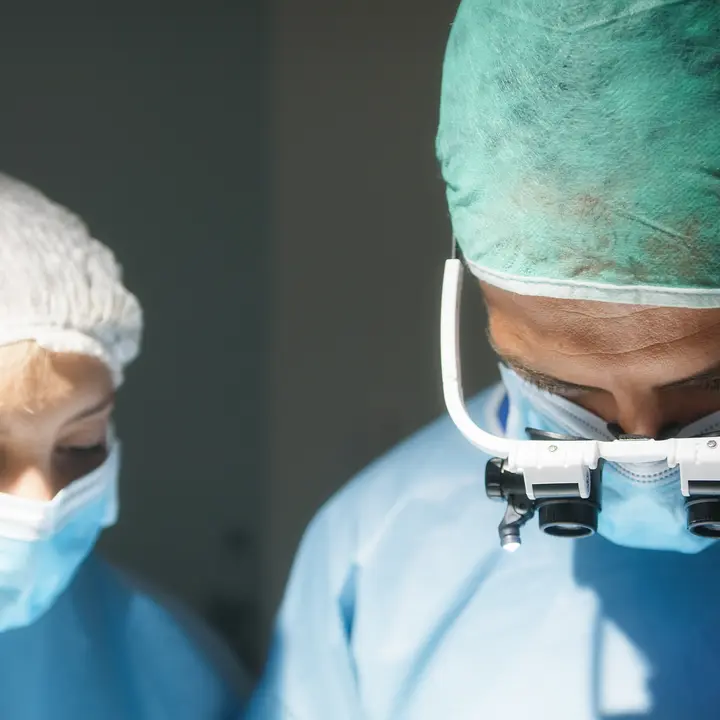
    For impacted teeth, a small flap is raised, minimal bone is removed and the tooth is sectioned so it can be lifted out in pieces with the least disturbance to the surrounding bone.

  3. Coronectomy

    When the roots lie against the inferior alveolar nerve, the crown alone may be removed and the roots left in place, reducing the risk of nerve injury.

  4. Three-dimensional assessment

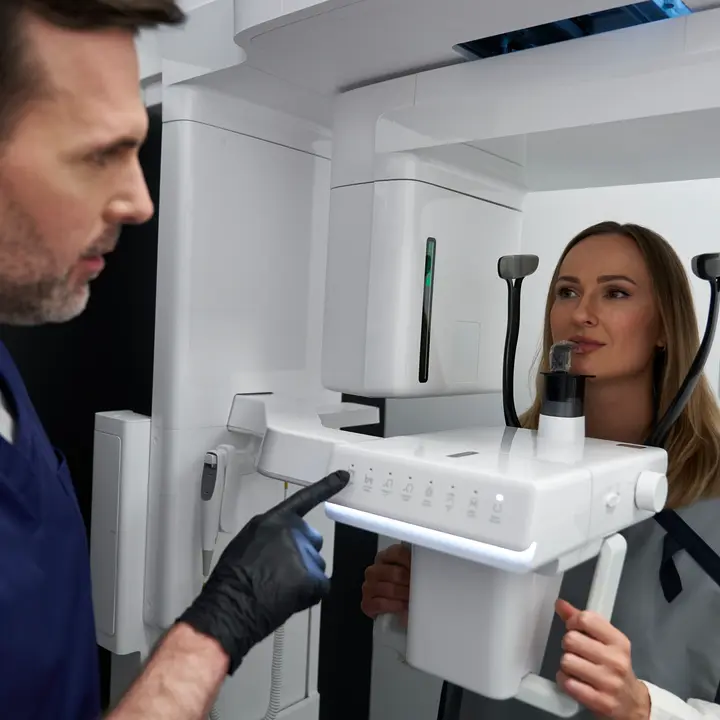
    Where a panoramic x-ray shows the roots close to the nerve, a cone-beam CT scan defines the relationship before surgery is planned.

When removal is recommended

Not every third molar needs to come out. Teeth that erupt fully, occlude properly and can be kept clean may be monitored. Removal is recommended when a tooth is causing disease, or when its position makes future problems likely and the risks of surgery are lowest now.

Classification on the panoramic x-ray (mesioangular, vertical, horizontal or distoangular, and the depth of impaction) predicts the difficulty of surgery and the expected recovery.

Risks, and how they are managed

  • Alveolar osteitis (dry socket), reduced by careful technique and post-operative instructions
  • Temporary or, rarely, persistent numbness of the lip, chin or tongue, assessed in advance from imaging
  • Swelling, bruising and limited opening, which resolve over the first week
  • Sinus communication with upper third molars, identified and closed at surgery if present
Recovery

What to expect afterward.

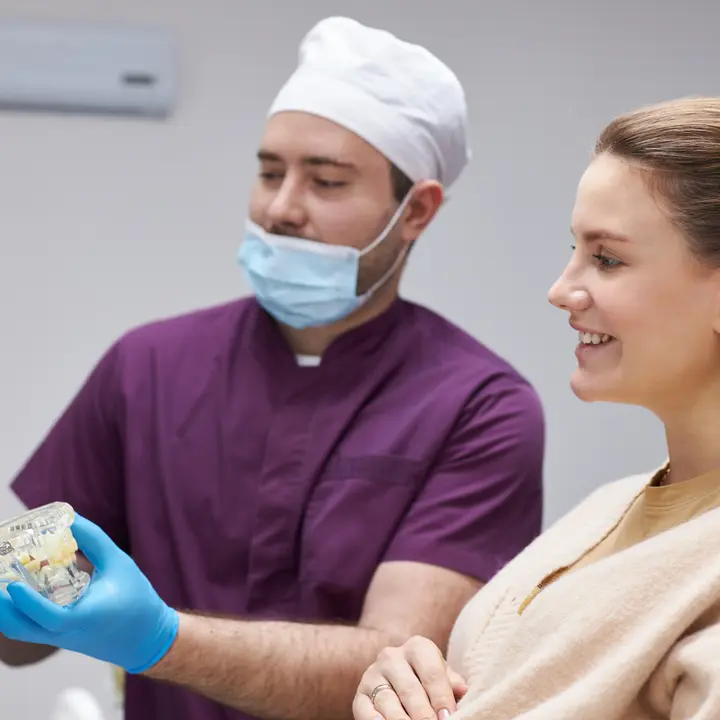
Swelling peaks on the second or third day, then subsides. Most patients return to school or work within three to five days. Detailed day-by-day instructions, prescriptions and a direct line to the office go home with every patient.

After Wisdom Tooth Removal

Questions

Wisdom Teeth: common questions.

Do all wisdom teeth need to come out?

No. Third molars that erupt fully, function and can be kept clean may stay and be monitored. An examination and panoramic x-ray show which are likely to cause problems.

What is the best age for removal?

Evaluation is ideal in the mid to late teens. When roots are only partly formed, the teeth are further from the nerve and the bone is more forgiving, so surgery and recovery are generally easier.

Will I be asleep?

Most patients choose IV sedation or general anesthesia for impacted wisdom teeth, both provided in the office. Local anesthesia with or without nitrous oxide is available for simpler cases.

Is there a risk to the nerve?

The inferior alveolar nerve runs beneath the lower third molars. Imaging shows how close the roots lie. Where the risk is significant, a coronectomy or a modified approach is discussed before surgery.

Plainview, Long Island

Ready when you are.

Request a consultation online, or call the office. We will find a time that works and answer your questions before you come in.