516-681-5330Request a visit

Procedures

Oral Pathology & Biopsy

Diagnosis and surgical management of lesions, cysts and tumors of the mouth and jaws, including biopsy and oral cancer evaluation.

Anesthesia
Usually local
Results
Typically within a week
Diagnosis
Confirmed by a pathologist
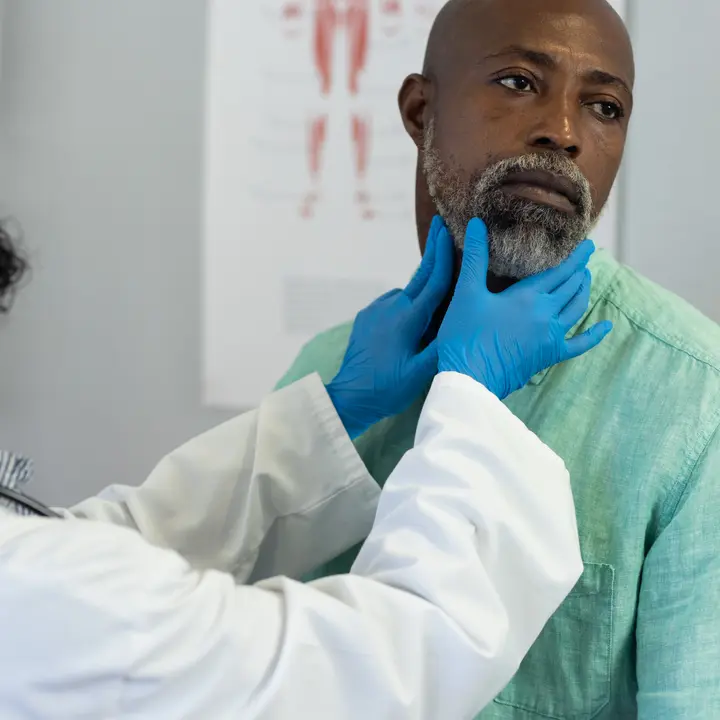
A clinician in gloves examining the jaw and neck of a seated man

Overview

What the procedure involves.

The lining of the mouth is normally smooth and coral pink. A change in color, texture or contour, or a lump that does not resolve, can be the first sign of a pathologic process. Most are benign, but some are premalignant or malignant, and early diagnosis changes outcomes.

Evaluation begins with a careful history and examination. When the nature of a lesion is not certain, a biopsy provides a definitive diagnosis from a pathologist.

Conditions we treat

  • White patches (leukoplakia) and red patches (erythroplakia)
  • Ulcers that do not heal within two weeks
  • Lumps or thickening of the cheek, tongue or floor of the mouth
  • Cysts and tumors of the jaws found on x-ray
  • Lesions of the salivary glands, including mucoceles
  • Persistent hoarseness, difficulty swallowing or numbness

Techniques & treatment options

Matched to the diagnosis, not a template.

  1. Incisional biopsy

    A representative portion of a larger lesion is removed to establish the diagnosis before definitive treatment is planned.

  2. Excisional biopsy

    A small lesion is removed entirely, which serves as both diagnosis and treatment.

  3. Enucleation of jaw cysts

    Cysts within the bone are removed in full, with marsupialization to decompress larger lesions first when appropriate.

  4. Resection and reconstruction

    Aggressive benign tumors and malignancies are managed with appropriate margins, in coordination with the head and neck oncology team.

Risk factors

  • Tobacco in any form
  • Heavy alcohol use
  • Human papillomavirus (HPV) infection
  • Chronic sun exposure, for lip cancer
  • A previous oral cancer

Self-examination

A monthly check in good light, looking at the lips, cheeks, gums, tongue (including its sides and underside) and the floor and roof of the mouth, helps catch changes early. Any finding that persists for more than two weeks warrants evaluation.
Recovery

What to expect afterward.

Most biopsy sites heal within one to two weeks with simple care. Results are reviewed in person, together with the plan for any further treatment.

All recovery instructions

Questions

Oral Pathology: common questions.

Does a biopsy mean I have cancer?

No. Most biopsies show a benign condition. A biopsy is the only way to know for certain, so it is recommended whenever a lesion cannot be confidently diagnosed by examination.

Is a biopsy painful?

It is performed under local anesthesia and usually takes only a few minutes. Afterward the site is tender for a few days, similar to a minor cut in the mouth.

How soon will I know the result?

The tissue is examined by an oral pathologist, and results are usually available within about a week.

Plainview, Long Island

Ready when you are.

Request a consultation online, or call the office. We will find a time that works and answer your questions before you come in.