516-681-5330Request a visit

Procedures

Corrective Jaw Surgery

Orthognathic surgery to reposition the upper jaw, lower jaw and chin, correcting skeletal bite discrepancies and improving function, breathing and facial balance.

Setting
Hospital operating room
Anesthesia
General anesthesia
Initial recovery
About 2 to 3 weeks
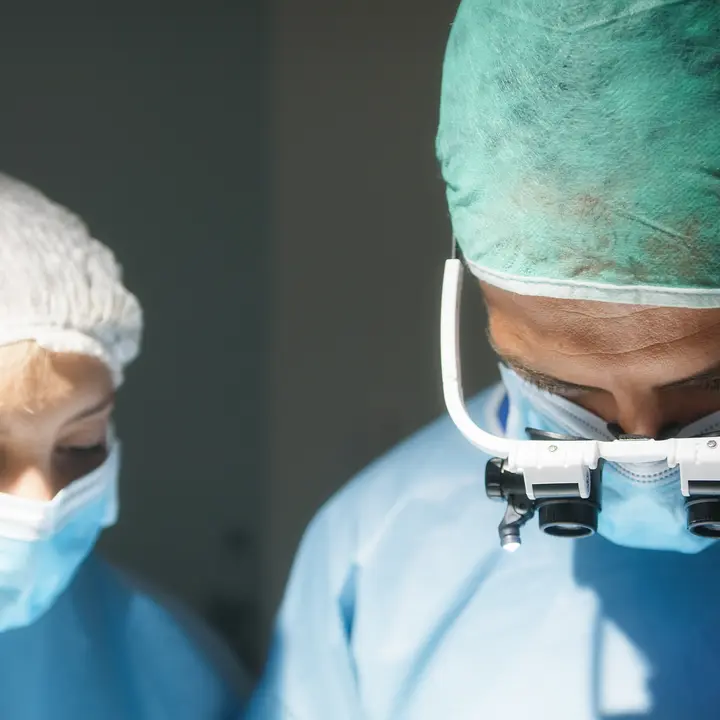
Two surgeons in caps and masks, one wearing surgical loupes, preparing to operate

Overview

What the procedure involves.

Orthognathic surgery corrects discrepancies in the size and position of the jaws that orthodontics alone cannot resolve. When the upper and lower jaws grow out of proportion, the result can be difficulty chewing and speaking, chronic jaw pain, an open bite, airway restriction and facial imbalance.

Treatment is a collaboration between the oral and maxillofacial surgeon and the orthodontist. Braces align the teeth to their correct position within each jaw; surgery then moves the jaws themselves into proper relationship.

Conditions we treat

  • Class II malocclusion, a retruded lower jaw
  • Class III malocclusion, a prominent lower jaw or deficient upper jaw
  • Anterior open bite
  • Facial asymmetry
  • Obstructive sleep apnea related to jaw position
  • Difficulty chewing, biting or swallowing

Techniques & treatment options

Matched to the diagnosis, not a template.

  1. Le Fort I osteotomy

    The upper jaw is separated above the tooth roots and moved forward, back, up or down, then secured with titanium plates.

  2. Bilateral sagittal split osteotomy

    The lower jaw is divided along each side so the tooth-bearing segment can be advanced or set back into a correct bite.

  3. Genioplasty

    The chin is repositioned to improve facial proportion and, in some cases, to support the airway.

  4. Maxillomandibular advancement

    Both jaws are advanced together to enlarge the airway, a recognized surgical treatment for selected patients with obstructive sleep apnea.

  5. Virtual surgical planning

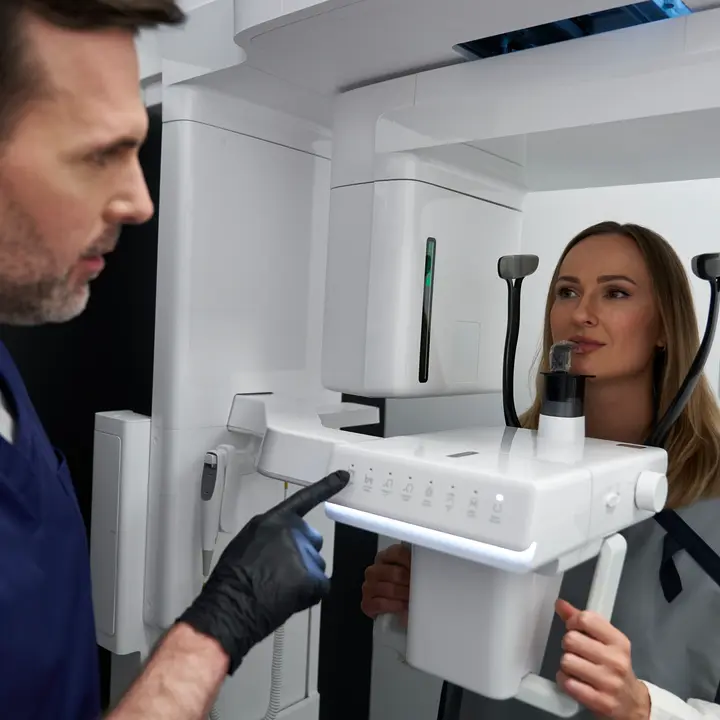
    Three-dimensional imaging and digital models are used to plan each movement and fabricate surgical splints before the operation.

The course of treatment

  • Consultation with records: imaging, photographs and models of the teeth
  • Pre-surgical orthodontics, typically twelve to eighteen months
  • Surgical planning in coordination with the orthodontist
  • Surgery under general anesthesia, usually with a short hospital stay
  • Post-surgical orthodontics to refine the bite

Insurance

When jaw surgery corrects a functional problem with chewing, speech or breathing, it is frequently covered by medical insurance. The office assists with documentation and pre-authorization.
Recovery

What to expect afterward.

Patients follow a liquid, then soft, diet for several weeks. Swelling is greatest in the first week; most return to school or desk work in two to three weeks, with full bone healing over about three months.

All recovery instructions

Questions

Jaw Surgery: common questions.

Will I need braces?

In almost all cases, yes. Orthodontics before surgery positions the teeth correctly within each jaw, and a shorter phase afterward finishes the bite.

Are there visible scars?

Jaw surgery is performed from inside the mouth, so there are no external facial scars in the great majority of cases.

Is jaw surgery covered by insurance?

When the surgery corrects a documented functional problem, medical insurance often covers it. The office helps prepare the records insurers require.

Plainview, Long Island

Ready when you are.

Request a consultation online, or call the office. We will find a time that works and answer your questions before you come in.